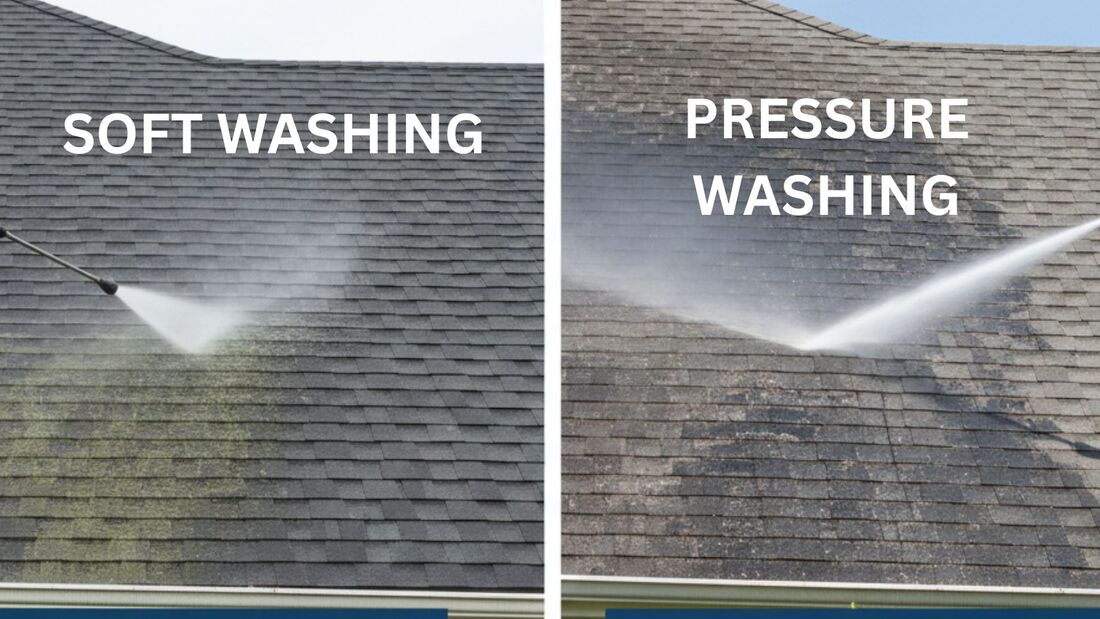
A practical breakdown of the two methods, what each one does, when to use which, and why it matters for your home.
By Joshua Kelley, Founder & Owner, Eco Blast Pressure Washing
If you have looked into getting your home cleaned, you have probably seen both “soft washing” and “pressure washing” offered and wondered whether they are the same thing or completely different services. The confusion is understandable because the terms get used loosely, and some companies treat them as interchangeable when they are not.
Here is the straightforward answer: pressure washing cleans with force. Soft washing cleans with chemistry. They use similar equipment, but the method, the pressure level, and the purpose are fundamentally different. Using the wrong one on the wrong surface is where real damage happens.
This article explains what each method actually does, which surfaces need which approach, and how to tell whether the company you are considering knows the difference.
What Pressure Washing Actually Is
Pressure washing uses high-pressure water, typically between 2,000 and 4,000 PSI, to blast dirt, grime, oil, stains, and biological growth off hard surfaces. The cleaning power comes from the mechanical force of the water hitting the surface.
A pressure washer is essentially a pump that takes water from a garden hose, compresses it through a small nozzle, and delivers it at a force strong enough to strip paint, etch concrete, or cut through caked-on grease.
When used correctly on appropriate surfaces, pressure washing produces fast, dramatic results. The problem is that “appropriate surfaces” is a much shorter list than most people realize.
When pressure washing is the right choice
Pressure washing works well on hard, durable surfaces that can handle the force without being damaged:
Concrete driveways and sidewalks. Concrete is dense and can withstand high pressure. A professional driveway cleaning uses a rotary surface cleaner at controlled PSI to remove red clay, oil, tire marks, algae, and rust from the surface.
Garage floors. Same principle as driveways. The concrete can handle it.
Parking lots and loading docks. Commercial concrete and asphalt surfaces with embedded grease and industrial residue need the mechanical force that pressure washing delivers.
Retaining walls made of poured concrete or concrete block.
Brick and stone walkways can be pressure washed, but at lower PSI than concrete. Too much pressure erodes mortar joints and pits the brick face.
What Soft Washing Actually Is
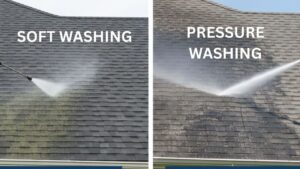
Soft washing uses low-pressure water (typically under 500 PSI, roughly the force of a garden hose) combined with a professional cleaning solution to kill and remove biological growth from surfaces.
The cleaning power does not come from force. It comes from the chemistry.
A typical soft wash solution contains sodium hypochlorite (a bleach-based compound) along with surfactants that help the solution spread evenly and cling to vertical surfaces. The solution is applied across the surface, allowed to dwell for a period of time, and then rinsed off with low-pressure water.
During the dwell time, the solution does three things simultaneously: it kills algae, mold, and mildew at the cellular level, it breaks the bond between the biological growth and the surface, and it lifts embedded dirt and pollen so the rinse carries everything away.
This is not the same as spraying store-bought bleach from a garden sprayer. Professional soft washing uses calibrated solution strengths, controlled dwell times, and application patterns that consumer products cannot replicate. Using the wrong concentration on the wrong surface can strip paint, discolor siding, or damage vegetation.
When soft washing is the right choice
Soft washing is required for any surface that would be damaged by high-pressure water:
House siding. Vinyl, fiber cement (HardiePlank), painted wood, stucco, and stone exteriors all need soft washing. High pressure on siding drives water behind seams, cracks vinyl, splinters wood, and strips paint.
Roofing. Asphalt shingles are designed to shed water, not withstand it being forced underneath them. Pressure washing a roof strips protective granules from shingles and shortens the roof’s lifespan. The Asphalt Roofing Manufacturers Association (ARMA) specifically recommends low-pressure chemical treatment as the approved cleaning method for asphalt shingles.
Painted surfaces. Doors, trim, shutters, and painted fencing.
Wood decks and fences. While some contractors use light pressure on wood, soft washing is safer because it avoids the fiber damage and etching that pressure causes on soft wood.
Screened enclosures and pool cages.
Commercial building facades including EIFS/Dryvit, stucco, and metal panel systems.
The Key Difference Most Articles Get Wrong
Most “soft wash vs. pressure wash” articles online frame the choice as a preference, as if you are picking between two equally valid options based on how aggressive you want to be.
That framing is wrong.
The choice is not about preference. It is about what the surface requires. Pressure washing your siding because you want “more cleaning power” will damage it. Soft washing your oil-stained driveway will leave the stains behind because the chemistry alone is not enough to break petroleum bonds in concrete pores without mechanical force.
A professional exterior cleaning company does not pick one method and use it everywhere. They use both methods on the same property, switching between them based on the surface they are working on.
At Eco Blast, a typical residential job might involve soft washing the siding and roof while pressure washing the driveway, sidewalks, and patio. Those are two different methods, two different pressure levels, and often two different chemical setups, all in the same visit.
What Happens When the Wrong Method Is Used
This is not theoretical. We see the results of incorrect methods regularly on homes throughout the Upstate.
Pressure washing siding
When high pressure hits vinyl siding, it can crack individual panels, drive water behind the siding into the wall cavity, and create moisture problems that lead to mold inside the wall. On painted wood siding, it strips paint and splinters the wood grain. On fiber cement, it can chip edges and force water into the substrate.
The damage is often not immediately obvious. A homeowner may think the wash went fine, only to discover peeling paint or interior moisture issues months later.
Pressure washing a roof
High pressure strips the ceramic-coated granules that protect asphalt shingles from UV damage. Those granules are your roof’s primary defense against the sun. Once they are gone, the exposed asphalt dries out, cracks, and fails prematurely. You might also notice granule accumulation in your gutters after a pressure-washed roof, which is a sign of accelerated shingle deterioration.
Many shingle manufacturers will void the warranty if evidence of pressure washing is found during a claim inspection.
Soft washing concrete only
Soft washing a driveway will kill surface algae and mold, but it will not remove embedded oil stains, ground-in red clay (a major issue in the Upstate because of our Piedmont soil), or heavy tire marks. Those contaminants sit inside the concrete pores and need the mechanical force of a surface cleaner at adequate PSI to extract them.
A company that “soft washes everything” may leave your concrete looking underwhelming while correctly cleaning your siding.
Why This Matters More in Upstate South Carolina
Our climate makes the distinction between these two methods even more important.
Humidity keeps biological growth active nearly year-round. Upstate summers push humidity into the 70s and 80s regularly, and even our winters stay damp enough that algae and mold do not go dormant the way they do in northern states. This means soft washing is not optional for siding and roofs in our area. It is the baseline maintenance method.
Red Piedmont clay requires pressure. The iron oxide in our clay soil bonds chemically with concrete pores. Soft wash chemistry alone will not break that bond. Proper concrete cleaning in the Upstate requires a pre-treatment product designed for iron oxide, followed by controlled pressure washing with a surface cleaner.
Heavy tree canopy accelerates everything. Neighborhoods throughout Greenville, Taylors, and Greer are filled with mature oaks and pines. Shaded surfaces develop growth faster and accumulate debris in gutters more quickly. Properties in heavily wooded areas often need cleaning more frequently than the standard annual schedule.
Pollen creates a foundation for future growth. The thick pollen layer that coats every outdoor surface each spring absorbs moisture and acts as a nutrient base for algae and mold. If it is not removed, it accelerates the growth cycle on every surface it sits on.
How to Tell If a Company Knows the Difference
When you are getting quotes, a few questions will quickly reveal whether a company understands method selection or just owns a pressure washer:
Ask what PSI they use on siding. If they say anything above 1,000 PSI, they are pressure washing your siding, not soft washing it. Professional soft washing stays under 500 PSI for application and rinsing on siding.
Ask what chemicals they use. “Just water” is a red flag. Soft washing requires a cleaning solution to kill biological growth. Water alone, regardless of pressure, does not kill algae. It just knocks the visible layer off temporarily, and the growth returns faster because the root structure is still intact.
Ask about roof cleaning specifically. If they say they pressure wash roofs, that is a company you should not hire for roof work. Full stop. ARMA guidance is clear on this, and the shingle damage from pressure is real and permanent.
Ask if they use a surface cleaner on concrete. A company pointing a handheld wand at your driveway will leave streaking (sometimes called tiger striping) and uneven results. A rotary surface cleaner produces uniform, even cleaning across the entire slab.
What Eco Blast Uses and Why
We are Soft Wash Certified and trained in proper chemical handling for every surface type. Here is how we approach a typical property:
Siding: Soft wash with a sodium hypochlorite solution calibrated to the specific siding material. Vinyl gets a standard mix. Painted wood and stucco get adjusted concentrations. We pre-soak all landscaping before application and rinse vegetation again after. Our house washing carries a 1-Year Algae-Free Guarantee.
Roof: Soft wash following ARMA-recommended guidelines. Low-pressure application, proper dwell time, controlled rinse. Our roof washing carries a 5-Year Streak-Free Guarantee.
Concrete and driveways: Pressure washing with a commercial-grade rotary surface cleaner. Pre-treatment with the appropriate chemistry for the stain type (degreaser for oil, iron oxide product for red clay, sodium hypochlorite for biological growth).
Commercial properties: Both methods depending on the surface. Building facades get soft washed. Concrete, loading docks, and dumpster pads get pressure washed with hot water and commercial degreasers.
We do not pick one method and use it on everything. We match the method to the material on every job.
Frequently Asked Questions
Is soft washing just low-pressure washing? No. Low pressure is part of it, but the real difference is the cleaning solution. Soft washing relies on chemistry to kill biological growth at the cellular level, not on water force. Low-pressure water alone, without the right solution, will not produce the same results.
Can I soft wash my own house with a garden hose and bleach? Technically you can apply a solution at low pressure, but store-bought bleach is not the same concentration or formulation as professional soft wash products. Using too strong a concentration can strip paint or kill landscaping. Using too weak a concentration will not kill the growth. Professional soft washing uses calibrated solution strengths with proper surfactants and plant protection protocols.
Does soft washing last longer than pressure washing? On surfaces like siding and roofing, yes. Because soft washing kills the organism rather than just removing the visible layer, regrowth takes significantly longer. Pressure washing only removes what is on the surface while leaving the root structure behind, so the growth returns faster.
Will pressure washing damage my driveway? Not when done properly. Concrete is durable enough to handle professional pressure washing. The issue is technique: a handheld wand held too close at too high a PSI can etch the surface and leave lines. A rotary surface cleaner at controlled pressure produces even results without damage.
Why do some companies only offer pressure washing? Because it requires less training. Pressure washing is straightforward: point and spray. Soft washing requires understanding chemical concentrations, dwell times, surface compatibility, and plant protection. Some companies have the equipment but not the training to soft wash safely.
My neighbor’s siding was damaged during a pressure wash. Is that common? It happens more often than it should. High pressure on vinyl cracks panels and drives water behind the siding. On painted wood, it strips paint and splinters the grain. This is exactly why soft washing exists as a separate method for delicate surfaces.
Should I ask for soft washing or pressure washing when I call for a quote? You should not have to choose. A qualified company will assess your property and use the correct method on each surface. If a company only offers one method for everything, that is a sign they may not be the right fit.
How much does each method cost? The method does not typically change the price significantly. What affects pricing is the surface type, property size, and severity of buildup. At Eco Blast, we provide honest, upfront quotes based on your specific property. Call us at 864-310-3916 or request a free estimate and we will typically respond within 24 hours.
Soft washing and pressure washing are not competing options. They are complementary tools that serve different purposes on different surfaces. Any company worth hiring uses both, and knows exactly when each one is appropriate.
If your home has not been cleaned in a while and you are not sure what it needs, reach out to us and we will walk you through what each surface requires. No pressure, no obligation, just straight answers.
Eco Blast Pressure Washing, 420 The Parkway, Suite L, Greer, SC 29650. Serving Greenville, Greer, Spartanburg, Simpsonville, Taylors, Mauldin, and the Upstate South Carolina area.